

Protect your tokens
Anyone who obtains a token can make requests allowed by its capabilities and content permissions. Depending on the token, this could expose or change workspace content. For a PAT, access is limited by the token’s capabilities and the permissions of the person who created it. For an internal connection, access is limited to pages shared with the connection and its capabilities.- Don’t share tokens in messages, support requests, issue trackers, or other public places.
- Don’t put tokens directly in source code or configuration files.
- Store tokens in environment variables or an encrypted secret manager.
- Use separate tokens for development, staging, and production.
- Grant only the capabilities that each application needs.
- Revoke tokens that you no longer use.
Store tokens outside your code
Use an environment variable for local development. Add.env files to .gitignore and never commit them.
Calling the API from a browser
The Notion API sends cross-origin resource sharing (CORS) headers, so browser code can call the API directly. Never ship an internal connection token or a client secret in page source that strangers can load. Anyone who can view the source can use that secret to act as the connection. For apps that other people use, create a public connection, which uses OAuth. Exchange the OAuth code for a token on a server you control. For a personal or local tool, putting a token in a page that only you can open is a risk you must choose whether to accept. OAuth token endpoints under/v1/oauth/* do not send CORS headers on purpose. OAuth code exchange requires a client secret and must run on a server.
Scan for exposed tokens
Enable secret scanning in your repository and CI system. Block commits that contain tokens, and alert the token owner if a token is detected.Replace tokens regularly
Replace long-lived tokens on a schedule and whenever someone with access to them leaves your team. PATs expire on the date chosen when the token is created, up to one year later. Replace a PAT before it expires.Respond to an exposed token
Revoke or replace a token immediately if it may have been exposed.1. Disable the token
1
Log in to Notion.
2
Go to Settings → Connections → Develop or manage connections.
3
Find the connection or personal access token that uses the exposed token.
4
Select Refresh for an internal connection, or revoke the personal access token.
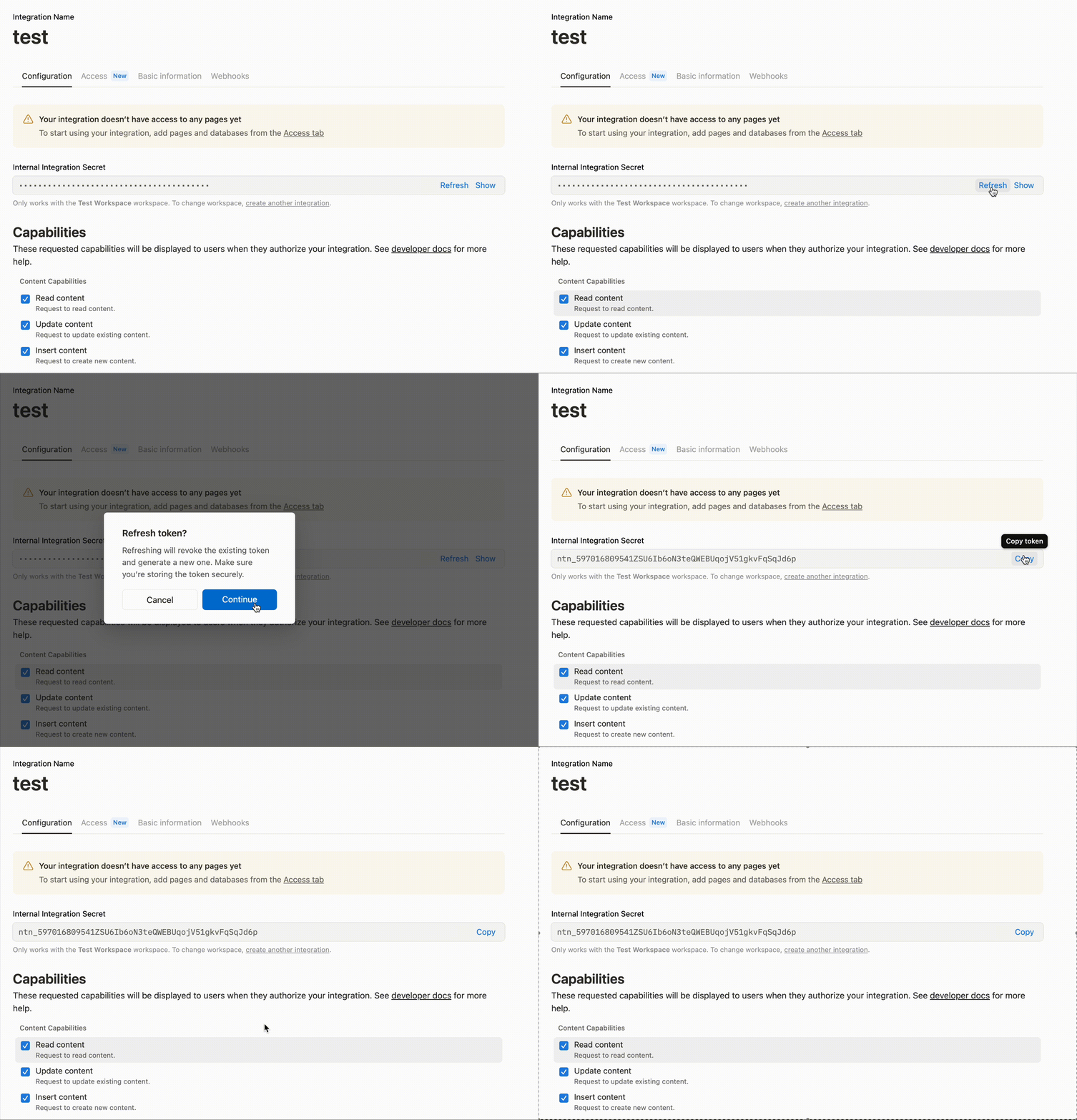
Select Refresh to replace the token for an internal connection.